Copeland’s Latest Award Win
Latest News
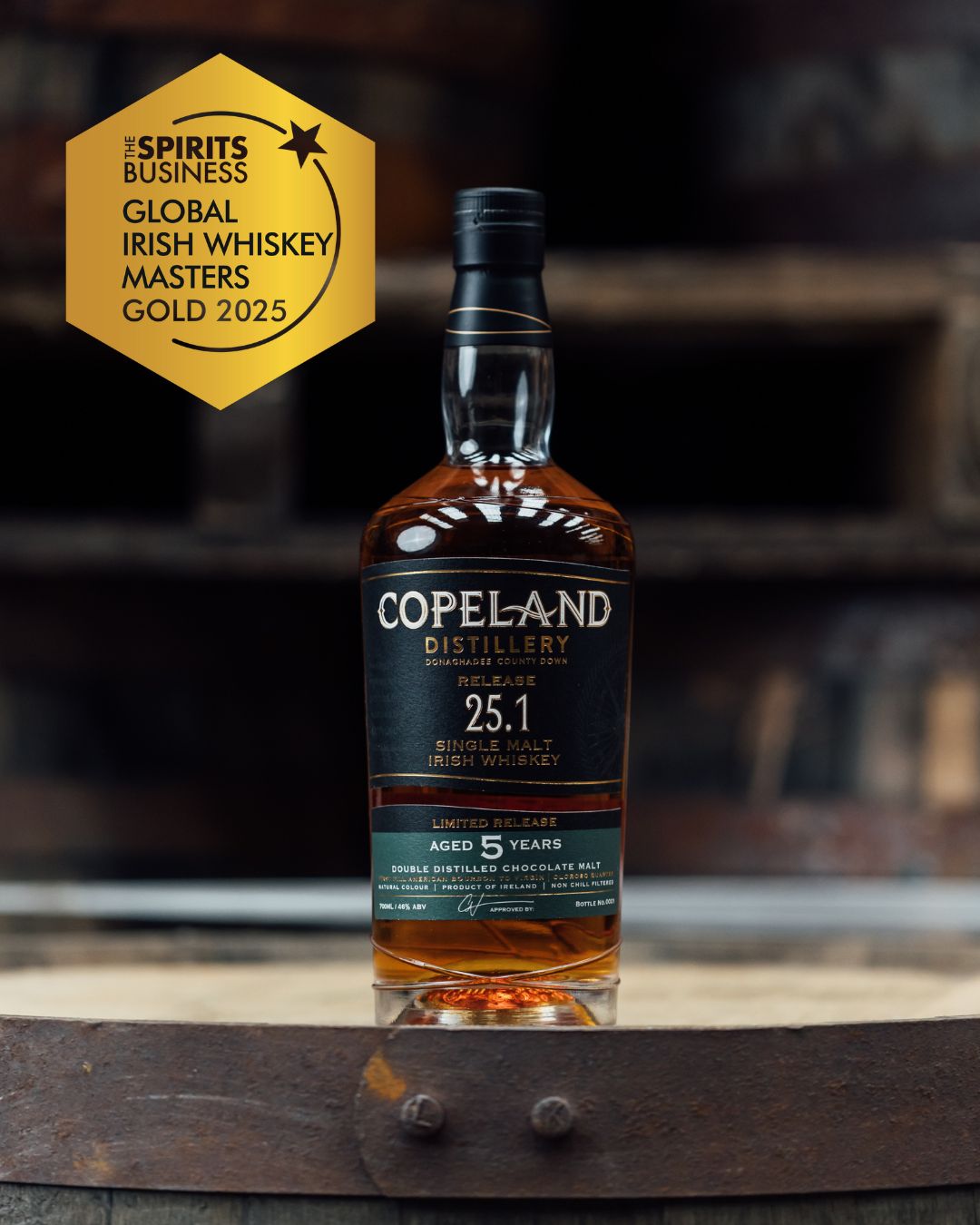
Copeland’s Latest Award Win and What It Really Signals for Investors
Not all whiskey awards carry the same weight. Some are marketing-led, some are consumer-voted, and some reward packaging as much as liquid. That is precisely why Copeland’s latest result matters. At the 2025 Irish Whiskey Masters, organised by The Spirits Business, entries were judged blind by multiple panels of industry specialists. Judges sampled without brand-first bias, and the competition drew 97 entries from more than 20 companies. In that context, a medal says something more useful than a press release ever could.
For investors, the significance is straightforward. A blind-tasted award does not guarantee future returns, but it does offer independent validation of liquid quality. In whiskey, quality matters because awards can strengthen brand credibility, improve trade confidence, support wider distribution, and help a producer move from local interest to broader market relevance. When a younger distillery begins collecting serious blind-tasting recognition, the conversation changes from “interesting brand” to “credible producer.”
What Copeland actually won
According to the published results from The Spirits Business, Copeland picked up Gold medals for Merchants’ Quay, Palo Cortado Finish in the Single Malt Premium category, Release 25.1 in the Single Malt Super-Premium category, and Merchants’ Quay 5 Years Old Single Grain in the Single Grain Premium category. Copeland’s own announcement focused on two of those wins, highlighting 25.1 Single Malt Irish Whiskey and Merchants’ Quay 5 Year Single Grain Irish Whiskey as Gold medal winners.
That matters because it shows range, not a one-off. A single award can happen. Multiple awards across different styles suggest a distillery is doing more than producing one successful release. It suggests competence across blending, cask management, wood policy, maturation decisions and final presentation. For anyone assessing a whiskey business from an investment point of view, consistency across categories is far more useful than one headline medal.
Why the Irish Whiskey Masters matters more than a generic medal
The value of an award depends on how it is judged. The Irish Whiskey Masters is run by The Spirits Business, and the 2025 competition used six judging panels to get through the field. The judges sampled entries blind and included specialist writers, buyers and drinks professionals such as Karen Taylor of Whisky For Everyone, Richard Legg of Distilled Knowledge, Bryan Rodriguez-Curtis of Bottle Apostle, Emily Webster of The Whisky Exchange, and others. That structure matters because it reduces the effect of branding, packaging and reputation at the point of tasting.
For a younger distillery, blind tasting is particularly important. Established names can carry legacy advantage in the market. Blind judging removes much of that. If a newer producer is still coming away with Gold, it suggests the liquid itself is competitive. From an investor’s perspective, that is the sort of signal worth paying attention to, because reputation can be built over time, but weak liquid is much harder to fix.
Why Copeland won
Copeland’s winning releases were not generic stock in standard dress. The distillery’s 25.1 Single Malt Irish Whiskey is built from a distinctive recipe and cask strategy. Copeland says 25.1 uses a mash bill of 90% malted barley and 10% chocolate malt, was matured initially in first-fill American bourbon casks, then moved into virgin American oak with a heavy char, with additional whiskey matured in a first-fill Oloroso sherry quarter cask. The whiskey is bottled at 46% ABV. That is a fairly confident construction for a young release and explains why the expression stands apart stylistically.
The same point applies to the single grain. Copeland’s Merchants’ Quay 5 Year Old Single Grain is bottled at 46% ABV, non-chill filtered, with no added colour, and has been described by retailers and trade coverage as combining bright fruit, caramelised apple, honeyed richness, warm oak and sherry-influenced depth. Separate reporting on the release notes that it was matured in American bourbon barrels and finished in Moscatel and sherry casks. In other words, the product has been given a clear flavour identity rather than being pushed out as a functional entry-level grain whiskey.
That matters because judges tend to reward balance, definition and execution. A cask finish alone does not win medals. Plenty of whiskey is over-finished or dressed up to compensate for youth. What blind judges are usually rewarding is integration. If the cask policy, bottling strength and spirit character are all working together, the result feels deliberate rather than engineered. Copeland’s results suggest the distillery is making those decisions well.
Why this is notable for Copeland specifically
Copeland is not a heritage giant with a century of whiskey releases behind it. According to its own company story, the distillery released its first signature Irish whiskeys in December 2024. Its inaugural whiskey release, Cask 001 The Founders Cask, was a 242-bottle single malt from Cask No.1, bottled at 52.5% ABV and priced at £350. Delivery began in December 2024. That means Copeland’s current award recognition has arrived relatively early in its whiskey lifecycle.
That early validation is commercially relevant. Investors are often trying to assess whether a producer is building genuine market equity or simply generating launch noise. A new entrant that can release whiskey, gain meaningful blind-tasting recognition, and continue adding new limited expressions starts to look structurally stronger than one relying purely on story. The distinction is important. Hype can help first allocation sell. It does not sustain demand. Quality does.
Awards are not the whole story, but they do affect market perception
No serious investor should treat a medal as a valuation model. Awards do not replace due diligence on ownership, cask quality, supply agreements, storage, insurance or exit routes. But they do influence how the market sees a distillery. Retailers, distributors, hospitality buyers and consumers all use third-party validation as a shorthand when judging newer producers. Trade awards can also help build confidence in export markets where the brand is not yet established.
Copeland already has some evidence of external market expansion. In 2022, The Spirits Business reported that the distillery had secured US distribution for its portfolio, with products set to reach multiple states. That does not tell us everything about the whiskey side today, but it does show management has experience building beyond a local footprint. When independent quality recognition is layered on top of that, the overall picture becomes more interesting.
The wider market backdrop matters too
Copeland’s awards have landed against a healthier backdrop for Irish whiskey overall. The Spirits Business reported, citing Bord Bia, that Irish whiskey exports bounced back by 13% to €1 billion in 2024 after a difficult 2023. That matters because awards are more valuable when the category itself is moving in the right direction. Recognition inside a growing market is usually more commercially meaningful than recognition in a shrinking one.
It also means investors should look at Copeland in context. This is not a story about one distillery in isolation. It is a story about a producer beginning to collect independent recognition at a time when Irish whiskey, as a category, is still demonstrating international demand and trade relevance. In practical terms, that is the sort of environment in which smaller but credible producers can start to close the gap on larger incumbents.
What this signals for investors
From an investment perspective, the award does not tell you everything, but it does tell you several useful things.
First, it suggests Copeland’s liquid can stand up under blind assessment. Second, it indicates breadth, because the medals span more than one whiskey style. Third, it supports the view that Copeland is building brand momentum on the back of product execution rather than pure marketing. Fourth, it strengthens the case that the distillery deserves to be watched more seriously in the context of future releases and cask demand.
That is the distinction sophisticated investors should keep in mind. The right question is not “Did they win an award?” The better question is “What kind of award was it, how was it judged, what did they win for, and what does it say about the producer’s direction?” In Copeland’s case, the answers are constructive. Blind tasting. Serious field. Multiple Gold results. Early-stage whiskey releases gaining external recognition. That is a stronger signal than headline hype alone.
Final view
Copeland’s latest award win is worth paying attention to precisely because it is not just another shiny badge. The Irish Whiskey Masters is a blind-tasted trade competition with credible judges and a broad field. Copeland’s performance points to quality in the bottle, clarity in product development, and growing seriousness as a whiskey producer. For investors looking at distillery momentum, that matters.
Awards should never replace proper investment analysis. But in whiskey, they can provide a useful independent signal, especially when they arrive early, are won blind, and are repeated across more than one expression. On that basis, Copeland looks less like a hype story and more like a distillery building substance.
At the bottom of this page, readers can use the enquiry form to request more information on Copeland investment opportunities and review whether the distillery’s progress fits their own investment criteria.