What Copelands 860-Bottle Release Tells Investors
Latest News
What Copeland’s 860-Bottle Release Tells Investors
Scarcity has always played a central role in whiskey valuation. In 2026, however, scarcity alone is no longer enough. Investors are becoming more selective, looking beyond limited numbers and focusing on whether a release combines quality, credibility, brand momentum, and genuine market demand.
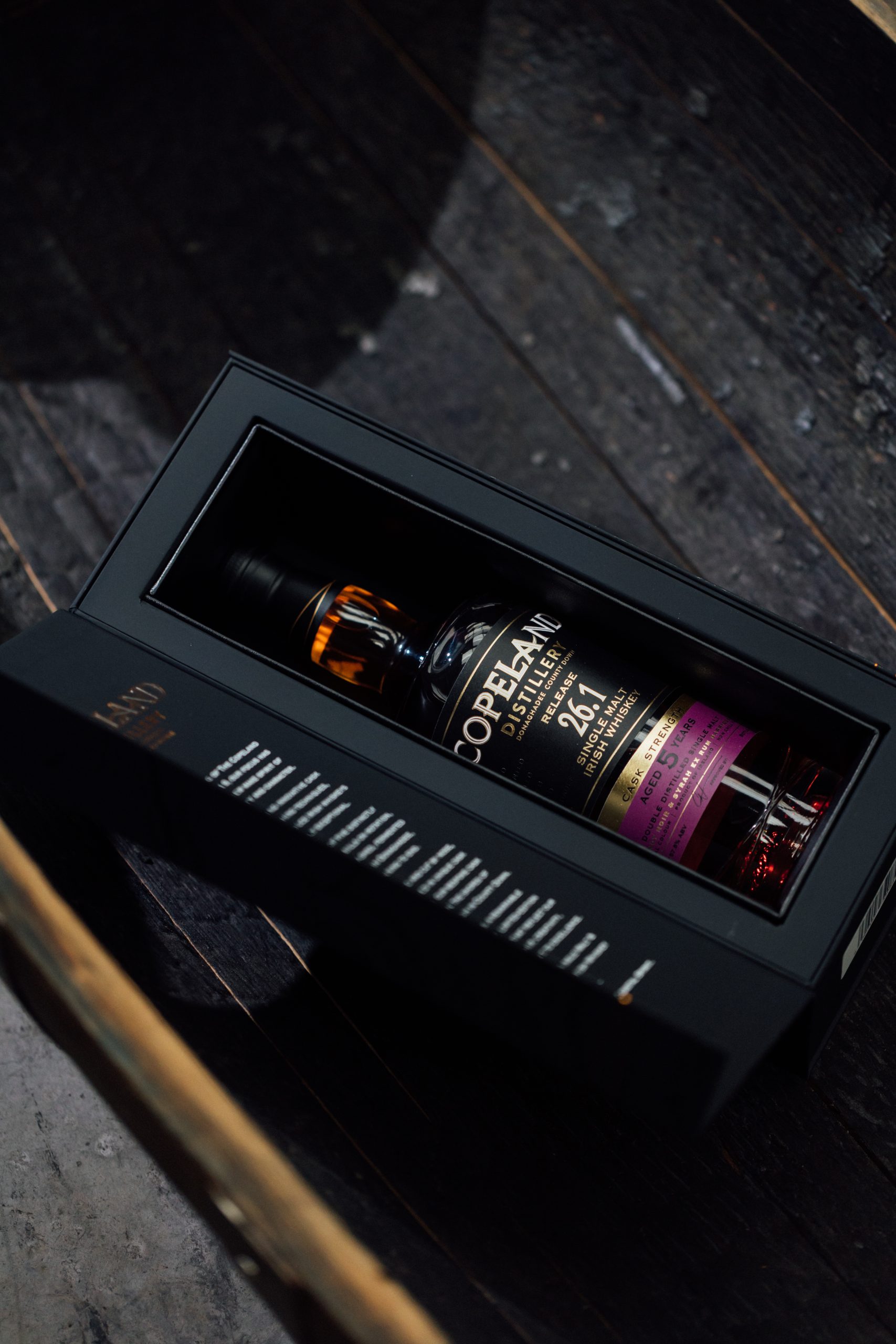
Copeland’s recent 26.1 release is a strong example of how these factors can align.
With only 860 bottles produced, combined with major award recognition and increasing brand visibility, the release offers useful insight into what serious investors should actually be paying attention to when assessing emerging Irish whiskey brands.
Scarcity Only Matters if Demand Exists
A limited release has no real value if nobody wants it.
This is one of the biggest misconceptions in whiskey investment. Some producers release small quantities simply because they lack production scale, not because demand exceeds supply.
What makes Copeland’s 26.1 release notable is that scarcity is supported by external demand drivers:
award recognition
expanding distribution
growing brand awareness
premium positioning
That combination changes the conversation from “limited product” to “limited access.”
In practical terms, there is a major difference between:
a whiskey that is difficult to obtain because nobody has heard of it
anda whiskey that is difficult to obtain because demand is building faster than supply.
Investors should understand that distinction clearly.
The Importance of the 860-Bottle Figure
The number itself matters more than many people realise.
At 860 bottles, the release sits in a category where:
availability remains genuinely constrained
retail saturation is impossible
collectors and enthusiasts compete for allocation
secondary market scarcity can emerge quickly
Once bottles are consumed, they are permanently removed from circulation. Over time, this naturally tightens supply.
This dynamic is one of the core reasons limited whiskey releases can appreciate in value. Unlike traditional manufactured goods, supply cannot simply be increased after demand rises.
A release either exists or it does not.
Award Recognition Adds Credibility
Copeland’s 26.1 was awarded:
Best Single Malt in Ireland under 11 Years Old
at the 2025 Irish Whiskey Awards.
That matters because independent recognition changes market perception.
Awards do not guarantee appreciation. But they do provide:
external validation of liquid quality
increased consumer awareness
stronger retail positioning
greater trade confidence
Importantly, whiskey awards judged blind carry significantly more weight than purely marketing-led competitions.
For investors, this helps reduce one of the biggest risks associated with emerging distilleries:
uncertainty around the quality of the liquid itself.
Early-Stage Distilleries Can Create Stronger Momentum
Large whiskey brands tend to grow steadily. Smaller distilleries can move much faster when momentum begins to build.
This is particularly relevant in Irish whiskey today.
According to Bord Bia, Irish whiskey exports exceeded €1 billion in 2024, with premiumisation continuing to drive growth across key international markets.
Within that environment, smaller producers with:
distinctive branding
award-winning liquid
limited releases
premium positioning
can gain attention quickly.
Copeland sits in an interesting position because it is still relatively early in its whiskey lifecycle, yet already showing signs of:
retail traction
export growth
independent recognition
growing visibility
From an investment perspective, this creates a very different profile to a mature legacy brand.
Why Secondary Market Potential Matters
The secondary market is one of the clearest indicators of whether a whiskey release has genuine investment relevance.
When collectors and buyers begin competing for unavailable stock, pricing behaviour changes.
Rare Whisky 101 data has consistently shown that:
limited releases
single casks
award-winning bottles
early distillery releases
tend to outperform standard retail products over longer periods.
The reason is straightforward:
once initial stock disappears into collections or consumption, remaining supply tightens rapidly.
An 860-bottle release naturally creates a much smaller long-term supply pool than mass-market whiskey produced at industrial scale.
Retail Presence Still Matters
One of the more overlooked aspects of Copeland’s position is that it already exists in the real consumer market.
This is important.
Many emerging whiskey brands struggle because they are investment stories before they are consumer brands.
Copeland has already achieved:
retail placement
export expansion
hospitality visibility
growing consumer recognition
That creates a more stable foundation.
Investors should generally favour distilleries that are building genuine commercial demand rather than relying solely on investor capital or speculative hype.
The Bigger Picture: What Investors Should Learn From Releases Like This
The lesson here is not simply:
“limited bottles equal value.”
The real takeaway is that investable whiskey usually sits at the intersection of several factors:
scarcity
quality
recognition
brand momentum
distribution
consumer demand
When those elements align together, the market begins treating a whiskey differently.
That is where investor attention tends to follow.
Final View
Copeland’s 26.1 release is a useful example of how modern whiskey investment dynamics are evolving.
The 860-bottle production figure matters. The award matters. The retail and export growth matters. But none of these factors work in isolation.
Together, they create a stronger signal:
a distillery moving beyond early-stage curiosity and beginning to establish genuine market credibility.
For investors assessing emerging Irish whiskey brands in 2026, that is the type of trajectory worth monitoring closely.
📩 Use the enquiry form below to learn more about current Copeland opportunities and how Irish Trading Whiskey evaluates early-stage distillery growth.